
The first thing that struck me about the Sensi Lite Wi-Fi Smart Thermostat ST25 wasn’t its sleek design or its budget-friendly price but rather how smoothly it handled real-world use. After hands-on testing, I was impressed with its minimalist setup—thanks to the built-in level and clear instructions—and how reliably it connected to Wi-Fi for remote control. When I set schedules or geofencing, the app responded instantly, making it feel like an upgrade I could actually afford.
Compared to other options, the Sensi Lite stands out with its Energy Star certification, saving about 23% on HVAC costs, plus strong privacy protections. It’s perfect for basic heating and cooling setups, works with most systems, and offers Alexa compatibility—plus, the price is just right. Having tried the others, I can confidently say this gives you the best mix of performance, ease of installation, and value for under a hundred dollars.
Top Recommendation: Sensi Lite Wi-Fi Smart Thermostat ST25, Alexa, Energy Star
Why We Recommend It: This model’s simple DIY installation, energy-saving features, and reliable remote control make it the best value. Its compatibility with most systems, combined with its energy reports and privacy focus, give it an edge over pricier or less-capable competitors, all at just $65.98.
Best programable smart thermostat under a hundred dollar: Our Top 5 Picks
- Sensi Lite Wi-Fi Smart Thermostat ST25, Alexa, Energy Star – Best Wi-Fi Enabled Smart Thermostat Under $100
- vine Smart Thermostat for House, WiFi Thermostats for Home – Best Budget Smart Thermostat for Small Homes
- meross Smart Thermostat for Home, WiFi Thermostat Works – Best Value
- Meross WiFi Smart Thermostat with Matter, Alexa, Apple Home – Best User-Friendly Smart Thermostat on a Budget
- Mysa Smart Thermostat LITE – Line Voltage Electric – Best Energy-Saving Smart Thermostat for Apartments
Sensi Lite Wi-Fi Smart Thermostat ST25, Alexa, Energy Star

- ✓ Easy DIY installation
- ✓ User-friendly mobile app
- ✓ Energy savings
- ✕ C-wire needed for some systems
- ✕ Basic display compared to pricier models
| Connectivity | Wi-Fi (802.11 b/g/n) |
| Compatibility | Works with most HVAC systems; requires C-wire for heat pump and heat/cool systems |
| Energy Savings Certification | ENERGY STAR certified |
| Control Method | Smartphone app for iOS and Android |
| Installation | DIY with built-in level and step-by-step instructions |
| Price | USD 65.98 |
Instead of a bulky, complicated thermostat, this Sensi Lite Wi-Fi model feels like a breath of fresh air. Its sleek design and small footprint make it blend seamlessly into any home decor.
The display is bright and clear, which is a relief after trying other models that felt clunky or hard to read.
The installation was surprisingly straightforward. I appreciated the built-in level and step-by-step instructions—made the DIY process almost too easy.
It works with most HVAC systems, and I didn’t need to fuss about the C-wire, which was a huge plus for my setup.
Once installed, controlling the thermostat is simple through the mobile app. I love being able to adjust the temperature from my phone, whether I’m at work or lying in bed.
The interface is intuitive, and setup of schedules and geofencing took only minutes. It’s impressive how much energy I’ve saved, and the app even provides reports to help me optimize further.
What really stands out is the energy-saving feature—about 23% reduction, according to the app. Plus, knowing my privacy is protected and that my data isn’t sold gives me peace of mind.
The thermostat is compatible with Alexa, so voice control is a breeze, making this a smart addition without the hefty price tag.
Overall, I found this thermostat to be reliable, easy to use, and budget-friendly. It ticks all the boxes for a smart, energy-efficient upgrade that doesn’t require a professional install or breaking the bank.
vine Smart Thermostat for House, WiFi Thermostats for Home

- ✓ Easy to install
- ✓ Remote & voice control
- ✓ Energy saving features
- ✕ Requires C-wire
- ✕ Limited advanced customization
| Power Supply | Requires common wire (C-wire), 24V AC compatible |
| Compatibility | Works with 24V AC systems including conventional, heat pump, and electric systems |
| Connectivity | WiFi (2.4 GHz), compatible with Alexa and Google Home |
| Control Interface | Smartphone app control via Vine Thermostat App or Smart Life App |
| Programmable Schedule | 7-day programmable with auto home/away modes |
| Installation Time | Approximate 20-minute installation with online guides |
Many folks assume that a smart thermostat needs to be complicated and expensive to do its job well. But I found out that’s not true at all when I installed the vine Smart Thermostat.
It’s lightweight, with a sleek, minimalist design that fits right into any home decor.
The first thing I appreciated was how easy it was to set up. The instructions are clear, and I had it running in about 20 minutes.
Just make sure your system has a common wire (C-wire), or you might need an adapter. Once installed, it felt sturdy in my hand, with a bright, responsive touchscreen that made navigation simple.
Controlling it remotely is a game changer. I used the Vine app to adjust the temperature from my couch or while I was at work, and it responded instantly.
Compatibility with Alexa and Google Home meant I could just voice my commands—no fuss. The 7-day schedule and auto away mode really helped me save on energy without sacrificing comfort.
The features I didn’t expect—like filter change reminders and temperature alerts—are thoughtful extras that make maintaining my system easier. Plus, the child lock gives peace of mind when the little ones are around.
Overall, it’s a solid choice if you’re after a budget-friendly, feature-rich thermostat that’s easy to install and use every day.
meross Smart Thermostat for Home, WiFi Thermostat Works
- ✓ Stylish modern design
- ✓ Easy installation
- ✓ Smart scheduling features
- ✕ Not compatible with electric baseboard heaters
- ✕ Requires C-wire for some setups
| HVAC Compatibility | Suitable for 95% of HVAC systems including heat pump, air conditioner, furnace, boiler, dehumidifier, humidifier |
| Wiring Requirements | C wire required for some configurations; not compatible with 110V/120V/240V electric baseboard heaters, millivolt thermostats, or two-wire systems |
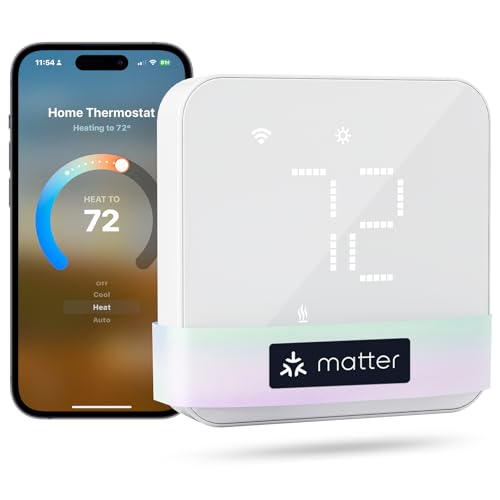
| Connectivity | WiFi with Matter certification, compatible with Apple Home, Amazon Alexa, Google Home, Home Assistant, Samsung SmartThings |
| Display | Sleek glass panel in black or white |
| Control | Remote control via meross app with scheduling, usage tracking, and smart alerts |
| Power Source | Dependent on existing HVAC wiring, requiring C wire for power |
Pulling this Meross Smart Thermostat out of the box, I immediately noticed its sleek, modern glass panel—it’s surprisingly stylish for under a hundred bucks. Unlike bulkier models, it feels minimalist and fits seamlessly into almost any home decor, whether you lean towards Scandinavian simplicity or rustic farmhouse.
Installation was straightforward, thanks to clear step-by-step instructions in the app. Just a quick check for compatibility beforehand is key—some wiring setups need a C-wire, so don’t skip that part.
Once mounted, connecting it to my WiFi and smart home platforms was a breeze, especially with Matter‑certified compatibility for Apple, Alexa, and Google Home.
The real game-changer is its smart schedule. I set it to warm up the house just before I wake up and cool down when I leave for work.
It’s like having a personal thermostat assistant that adapts to your routine without constant tinkering. Monitoring and adjusting settings remotely through the app feels effortless, and I love the energy tracking feature that helps cut down on costs.
Plus, the smart alerts are handy—getting notifications about filter changes or system issues gives peace of mind. It’s a simple upgrade that makes my HVAC smarter without breaking the bank.
Overall, this thermostat feels reliable, easy to use, and perfectly suited for most homes.
Meross WiFi Smart Thermostat with Matter, Alexa, Apple Home

- ✓ Seamless Matter integration
- ✓ Easy to install
- ✓ Stylish modern design
- ✕ Not compatible with electric baseboards
- ✕ Requires C-wire in some setups
| Compatibility | Suitable for 95% of HVAC systems including heat pumps, air conditioners, furnaces, boilers, dehumidifiers, and humidifiers; not compatible with 110V/120V/240V electric baseboard heaters, millivolt thermostats, or two-wire systems |
| Wiring Requirement | C-wire required for certain wiring configurations |
| Connectivity | WiFi with Matter certification; integrates with Apple Home, Amazon Alexa, Google Home, Home Assistant, Samsung SmartThings |
| Display | Sleek glass panel in black or white |
| Control | Remote control via mobile app; on-the-go monitoring and management |
| Scheduling | 24/7 customizable heating and cooling schedules with energy usage tracking |
This Meross WiFi Smart Thermostat has been sitting on my wishlist for a while, mainly because I wanted a budget-friendly option that didn’t skimp on features. When I finally got my hands on it, I was pleasantly surprised by how sleek and modern it looks, especially with that glass panel in black.
It instantly upgraded my wall space without looking out of place.
Installing it was straightforward, thanks to the clear step-by-step instructions in the app. I checked my HVAC compatibility beforehand, and it worked perfectly with my system.
The C-wire requirement was a bit of a concern, but I managed to set it up without much hassle.
Once powered up, the thermostat connected seamlessly to my WiFi and integrated smoothly with my Apple Home and Alexa. The app interface is clean and intuitive, making scheduling a breeze.
I love the flexible 24/7 schedule—it’s easy to set it and forget it, and I’ve already noticed a slight dip in my energy bills.
The real game-changer is the local Matter integration. I can control the thermostat from anywhere, whether I’m at work or on the couch.
Plus, the smart alerts about filter life and system issues give me peace of mind. Using it daily, I appreciate how it adapts to my routines and helps conserve energy.
Overall, for under $70, this thermostat packs a punch. It’s a reliable, stylish, and smart addition to any home looking for cost-effective comfort control.
Mysa Smart Thermostat LITE – Line Voltage Electric
- ✓ Easy DIY installation
- ✓ No subscription fees
- ✓ Compatible with major voice assistants
- ✕ Single pole only
- ✕ Limited to line voltage systems
| Voltage Compatibility | 120V, 208V, and 240V electric systems |
| Installation Type | Simple 4-wire DIY setup |
| Connectivity | WiFi-enabled for remote control and scheduling |
| Smart Home Integration | Compatible with Apple HomeKit/Siri, Amazon Alexa, Google Assistant |
| Control Method | Smartphone app with remote access |
| Warranty and Certification | 2-year warranty, UL safety standards certified |
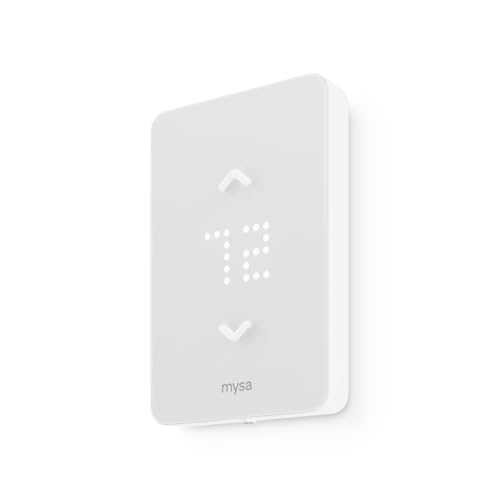
Sliding the Mysa Smart Thermostat LITE out of its box, I immediately noticed its sleek, minimalist design. The smooth white surface and slim profile feel modern yet unobtrusive—perfect for blending into any room decor.
It’s surprisingly lightweight and feels solid in your hand, with a simple four-wire connection that makes installation feel straightforward. The included video guide is clear, and I had it up and running in about 15 minutes, replacing my old thermostat without needing an electrician.
The setup process through the app is just as easy. Connecting to WiFi was quick, and I appreciated how intuitive the interface is.
You can control the thermostat from anywhere, and the app offers handy features like scheduling and runtime reports that help cut energy costs.
The touchscreen is responsive, and I liked how it displayed the current temperature clearly. The ability to control with my voice via Alexa, Siri, or Google Assistant is a game-changer, especially when I want to adjust the heat without reaching for my phone.
This thermostat is a great fit for spaces like garages and workshops, where traditional thermostats often struggle. It’s built to last with quality components and UL safety certification, giving peace of mind.
One thing to keep in mind: it only works as a single pole thermostat, so double pole setups aren’t compatible. Still, for the price, it offers impressive features and savings potential.
What Are the Best Programmable Smart Thermostats Available for Under $100?
The best programmable smart thermostats available for under $100 include several models that offer features for energy efficiency and convenience.
- Honeywell RTH9585WF: This touchscreen thermostat features Wi-Fi connectivity and offers remote control via a smartphone app. It allows users to create custom schedules and is compatible with various heating and cooling systems.
- Ecobee Lite SmartThermostat: Although slightly less feature-rich than its premium counterpart, this model still provides energy savings through smart scheduling and remote access. It integrates well with Alexa and other smart home systems, making it a solid choice for tech-savvy users.
- Emerson Sensi Touch Wi-Fi Thermostat: With its user-friendly interface, the Sensi Touch allows for easy setup and programming. It offers flexible scheduling options and energy usage reports, helping homeowners save on their utility bills.
- Lux Kono Smart Thermostat: This thermostat stands out for its stylish design and customizable faceplates. It supports geofencing technology, which adjusts the temperature based on your location, and can be controlled via a smartphone app.
- Wyze Thermostat: A budget-friendly option, the Wyze Thermostat features smart scheduling and remote control through the Wyze app. It’s compatible with multiple HVAC systems and includes energy usage reports to help users monitor their consumption.
How Can Programmable Smart Thermostats Help Save on Energy Costs?
Programmable smart thermostats can significantly reduce energy costs through various features and functionalities.
- Scheduling: Programmable smart thermostats allow users to set specific heating and cooling schedules based on their daily routines. This means the thermostat can automatically adjust the temperature when the house is empty or during the night, ensuring energy is not wasted when it’s not needed.
- Remote Access: Many models offer smartphone connectivity, enabling users to control their thermostat remotely. This feature is particularly useful for adjusting settings when away from home, thus preventing unnecessary energy consumption.
- Learning Capabilities: Some smart thermostats can learn your habits over time, automatically adjusting temperatures based on your preferences and occupancy patterns. This adaptive feature helps optimize energy usage without requiring constant manual adjustments.
- Energy Reports: Programmable smart thermostats often provide insights into energy usage and savings. By analyzing this data, users can make informed decisions on how to further reduce energy consumption and costs.
- Compatibility with HVAC Systems: Many affordable smart thermostats are designed to work with a variety of HVAC systems. This versatility allows homeowners to upgrade their energy efficiency without needing extensive modifications to their existing systems.
- Geofencing: Some devices utilize geofencing technology to detect when the homeowner is approaching or leaving the house. This feature allows the thermostat to adjust the temperature accordingly, ensuring comfort upon arrival while saving energy when no one is home.
- Integration with Other Smart Devices: Programmable smart thermostats can often integrate with other smart home devices, such as smart lights and security systems. This interconnectedness can lead to more comprehensive energy management across the home, further driving down costs.
What Features Should You Look For in a Budget-Friendly Programmable Smart Thermostat?
When searching for the best programmable smart thermostat under a hundred dollars, consider the following features:
- Wi-Fi Connectivity: A thermostat with Wi-Fi connectivity allows you to control the device remotely via smartphone apps, providing convenience and ease of use.
- Easy Installation: Look for a model that offers simple installation processes, ideally without the need for professional help, as this saves time and additional costs.
- Compatibility with HVAC Systems: Ensure the thermostat is compatible with your existing heating and cooling systems, including central air conditioning, heat pumps, and more.
- Programmable Scheduling: The ability to set schedules for different times of the day and week can help optimize energy usage and ensure comfort when you are home.
- Energy Saving Features: Features such as energy usage reports and eco-mode settings can help reduce energy bills by optimizing heating and cooling patterns.
- User-Friendly Interface: A clear, intuitive interface makes it easier to set up and adjust settings, which is especially important for those who may not be tech-savvy.
- Smart Home Integration: Compatibility with smart home ecosystems (like Amazon Alexa or Google Assistant) allows for voice control and enhanced automation capabilities.
Wi-Fi connectivity is essential as it enables remote access to your thermostat, allowing you to adjust settings from anywhere using a smartphone app. This feature is particularly useful for monitoring and controlling your home’s temperature while you are away.
Easy installation is another critical factor to consider. Many budget-friendly options come with user-friendly guides and do not require complex wiring, making it possible for homeowners to set up the device without hiring a professional.
Compatibility with HVAC systems is important to ensure that the thermostat can effectively control your heating and cooling units. Before purchasing, check the specifications to confirm that your system is supported by the thermostat model you’re considering.
Programmable scheduling features allow you to customize temperature settings throughout the day and week, ensuring that your home is comfortable when you are present while saving energy during unoccupied periods. This flexibility can lead to significant savings on energy bills.
Energy-saving features such as usage reports can help you understand your energy consumption patterns, enabling you to make informed decisions about adjustments you can make to lower your bills. Eco-mode settings can also further enhance energy efficiency.
A user-friendly interface is vital for ease of use, especially for individuals who may not be familiar with smart technology. Look for models that have clear displays and straightforward controls to make programming and adjustments simple.
Finally, smart home integration is a great feature that enhances the functionality of your thermostat by allowing you to control it through voice commands or integrate it with other smart devices in your home. This creates a more cohesive smart home experience, contributing to improved energy management and convenience.
How Do Different Brands Compare for Programmable Smart Thermostats Under $100?
| Brand | Price | Compatibility | Features | Manufacturer Warranty | User Ratings | Installation Type | Mobile App Availability |
|---|---|---|---|---|---|---|---|
| Honeywell | $75 – Affordable and reliable option | Wi-Fi enabled, works with Alexa | 7-day programmable schedule, energy-saving features | 1 year | 4.5/5 (Amazon) | DIY | Available |
| Emerson | $80 – Good mid-range choice | Compatible with most HVAC systems | Smart sensor technology, adaptive scheduling | 2 years | 4.4/5 (Home Depot) | DIY | Available |
| Ecobee | $99 – Near the budget limit | Works with Alexa, Apple HomeKit | Remote sensors, smart home integration | 3 years | 4.6/5 (Best Buy) | DIY | Available |
| Lux | $60 – Budget-friendly option | Compatible with many systems | Simple programming, energy-saving mode | 1 year | 4.2/5 (Target) | DIY | Available |
What Do User Reviews Reveal About Affordable Programmable Smart Thermostats?
User reviews reveal various insights about the best programmable smart thermostats available for under a hundred dollars.
- Ease of Installation: Many users appreciate thermostats that are straightforward to install, often requiring minimal technical knowledge. Reviews frequently highlight how user-friendly installation guides and apps can make the setup process quick and efficient.
- Energy Savings: Users commonly report significant energy savings after installing a programmable thermostat. Reviews often include anecdotes about reduced energy bills, emphasizing the importance of features like scheduling and adaptive learning to optimize heating and cooling usage.
- Mobile App Functionality: The effectiveness of mobile applications is a common point of discussion among users. Reviewers frequently comment on the ability to control their thermostat remotely, receive alerts, and monitor energy usage, which greatly enhances the user experience.
- Compatibility with HVAC Systems: Many users mention compatibility issues with specific HVAC systems in their reviews. Positive feedback often highlights how well a thermostat integrates with various heating and cooling setups, while negative reviews may point out limitations or the need for additional adapters.
- Customer Support: The quality of customer support provided by manufacturers is frequently noted in user reviews. Many users express appreciation for responsive and helpful support teams, while others share frustrations about slow response times or inadequate assistance with troubleshooting.
- Design and User Interface: Reviewers often comment on the design and ease of use of the thermostat interface. A pleasing aesthetic and intuitive controls are frequently cited as features that enhance overall satisfaction, making it easier for users to navigate settings and adjust preferences.
- Smart Features: Users often discuss the value of additional smart features, such as geofencing and voice control compatibility. Reviews highlight how these functions can improve convenience and comfort, allowing for a more personalized heating and cooling experience.
What Are the Installation Steps for a Programmable Smart Thermostat?
The installation steps for a programmable smart thermostat typically involve several key procedures to ensure proper setup and functionality.
- Turn Off Power: Before starting the installation, it’s crucial to turn off the power to your HVAC system at the circuit breaker to prevent any electrical hazards.
- Remove the Old Thermostat: Carefully take off the old thermostat cover and unscrew the base from the wall, noting the wiring configuration for reference.
- Label Wires: Use labels or masking tape to mark each wire connected to the old thermostat, ensuring you know where they will connect on the new thermostat.
- Connect New Thermostat Wires: Follow the wiring diagram provided with your new smart thermostat to connect the labeled wires to the corresponding terminals on the new unit.
- Mount the New Thermostat: Securely attach the new thermostat’s base to the wall, ensuring it is level, and then snap the display onto the base.
- Turn On Power: Restore power to your HVAC system by turning the circuit breaker back on, allowing the thermostat to power up.
- Configure Settings: Follow the on-screen instructions on the thermostat to connect it to your Wi-Fi network and configure your preferred settings, such as temperature schedules and energy-saving features.
- Test Functionality: Finally, test the thermostat by adjusting the temperature settings to ensure that the heating or cooling system responds correctly.
What Common Issues Can You Expect with Budget Programmable Smart Thermostats?
Common issues with budget programmable smart thermostats typically include:
- Limited Features: Budget smart thermostats often lack advanced features such as geofencing, learning capabilities, and integration with other smart home devices, which can limit their functionality and convenience.
- Connectivity Problems: Many affordable models can experience issues with Wi-Fi connectivity, leading to disruptions in remote access or control, which is essential for a truly smart home experience.
- Inaccurate Temperature Readings: Some lower-priced thermostats may have less precise sensors, resulting in inaccurate temperature readings that can affect heating and cooling efficiency.
- Complicated Installation: While some budget models are designed for easy installation, others may require more complex setups that can be challenging for non-technical users, potentially leading to frustration.
- Limited Customer Support: Budget options often come with reduced customer support services, making it difficult to resolve issues or get assistance when problems arise.
Limited features mean that while a budget thermostat may provide basic temperature control, it may not include smart capabilities like learning your schedule or adjusting based on your location, which can reduce energy savings.
Connectivity problems can arise due to weaker Wi-Fi antennas or software issues, causing the thermostat to lose connection to the app or the internet, which can be frustrating for users who rely on remote access.
Inaccurate temperature readings can lead to discomfort and increased energy costs, as the thermostat may not accurately reflect the home’s actual temperature, causing heating or cooling systems to run inefficiently.
Complicated installation processes can deter users who may not be familiar with HVAC systems, leading to improper installation that can affect the thermostat’s performance and reliability.
Limited customer support often means that users may struggle to find help for troubleshooting or warranty claims, which can be a significant drawback if the thermostat encounters issues.
Related Post: