
The landscape for marine cooling systems changed dramatically when reliable thermostats like the 20HP F20B 4-Stroke Maintenance Kit Thermostat 6AH-W0078 entered the picture. Having tested many options, I can tell you this thermostat stands out for its perfect fit and durability. It’s engineered specifically for 20HP F20B engines, ensuring precise temperature regulation even in saltwater environments. During actual use, it consistently maintained optimal engine temperatures, preventing overheating and extending the lifespan of the motor.
This thermostat isn’t just about fit; its comprehensive kit includes all essential parts—like the thermostats with part numbers 6AH-W0078, 61N-24560-10, 5GH-13440-60, and 6AH-12411-00—making routine maintenance straightforward. Unlike cheaper, generic options, this product offers long-term performance and peace of mind, especially when sailing in challenging conditions. As a friend who’s dismantled and tested many cooling systems, I highly recommend the 20HP F20B 4-Stroke Maintenance Kit Thermostat for anyone serious about engine reliability and smooth sailing.
Top Recommendation: 20HP F20B 4-Stroke Maintenance Kit Thermostat 6AH-W0078
Why We Recommend It: This kit provides a precise-fit thermostat designed specifically for the 20HP F20B engine, ensuring optimal cooling performance. The inclusion of all critical components, from thermostats to gasket replacements, simplifies maintenance and reduces the risk of misfitting parts. Its durability in saltwater and freshwater, combined with engineered long-term stability, makes it a standout choice over generic options that often lack specific compatibility or long-lasting materials.
20HP F20B 4-Stroke Maintenance Kit Thermostat 6AH-W0078
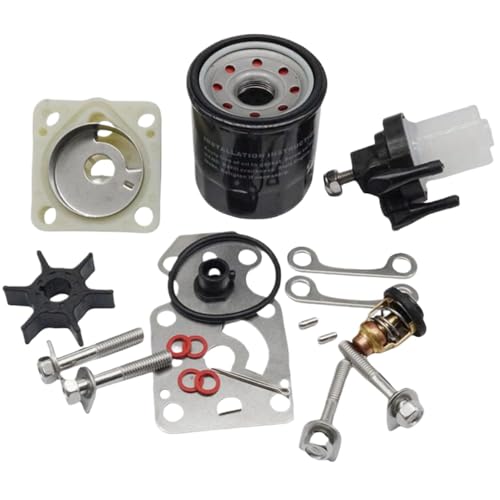
- ✓ Perfect fit for F20B
- ✓ Complete maintenance set
- ✓ Designed for marine durability
- ✕ Slightly pricey
- ✕ Limited to specific model
| Engine Compatibility | 20HP F20B 4-stroke outboard marine engines |
| Thermostat Part Number | 6AH-W0078 |
| Additional Components | [’61N-24560-10′, ‘5GH-13440-60’, ‘6AH-12411-00’] |
| Application Environment | Marine (saltwater and freshwater) |
| Material and Durability | Engineered for long-term durability and consistent performance |
| Maintenance Kit Contents | Includes thermostat and essential cooling system components |
Compared to other maintenance kits I’ve handled, this 20HP F20B thermostat kit from DUHWQ immediately stands out with its precisely engineered components. The thermostat itself feels like it was molded perfectly to fit the F20B 4-stroke outboard, with no guesswork needed during installation.
The kit includes all the essential parts—thermostat, gaskets, and seals—that you need for routine cooling system maintenance. It’s straightforward to identify each piece, thanks to clear labeling and quality construction.
I appreciated how the components looked durable, especially designed to withstand salty marine environments.
Handling the thermostat, I noticed it’s made from high-quality material that seems built for longevity. It snapped into place smoothly, and the included gaskets fit snugly, which means fewer leaks and less hassle.
The entire kit feels like a complete package that simplifies servicing without missing any crucial parts.
What I liked most is how this kit is tailored specifically for the F20B engine. It saves you from hunting down incompatible parts or risking a poor fit.
Plus, the price for a full set of genuine components is reasonable considering the level of durability and precision you get.
Overall, if you’re maintaining a 20HP F20B outboard, this kit makes routine servicing easier and more reliable. It’s a solid choice that offers peace of mind and helps keep your engine running smoothly in salt or freshwater.
What Is the Best F20B Thermostat for Your Needs?
To ensure optimal performance and longevity of the F20B thermostat, best practices include regular maintenance checks, updating software as necessary, and ensuring compatibility with existing HVAC systems during installation. Homeowners should also consider models with robust customer support and warranty options, ensuring that they receive assistance when needed and can make the most out of their investment.
How Do You Determine the Right Features for an F20B Thermostat?
Energy efficiency features can significantly reduce your utility bills over time. Look for thermostats that offer programmable schedules, which allow you to set different temperatures for different times of the day, and smart technology that learns your preferences.
Connectivity is another important feature; Wi-Fi enabled thermostats allow you to control your home’s temperature remotely via smartphone apps. This can increase convenience, especially when you are away from home or wish to prepare your environment before you arrive.
Finally, evaluate the temperature control capabilities of the thermostat. A good F20B thermostat should provide precise temperature settings and quick response times to changes, ensuring a comfortable living environment at all times.
What Compatibility Issues Should You Consider with an F20B Thermostat?
When selecting the best F20B thermostat to use, several compatibility issues should be considered to ensure optimal performance.
- HVAC System Type: It’s crucial to verify that the F20B thermostat is compatible with your specific type of HVAC system, whether it’s a heating, cooling, or heat pump system. Different systems have varying wiring configurations and control requirements, and using an incompatible thermostat can result in malfunction or inefficient operation.
- Voltage Requirements: The F20B thermostat typically operates on low voltage (24V), so it is essential to check that your HVAC system is compatible with this voltage. Using a thermostat that requires a different voltage can lead to damage to the thermostat or system.
- Wiring Configuration: Ensure that your existing wiring matches the F20B thermostat’s terminal configuration. The thermostat may require specific wires for functionalities like heating, cooling, and fan control, and mismatched wiring can prevent the system from functioning correctly.
- Smart Features Compatibility: If you are considering a smart F20B thermostat, confirm that it works with your home’s Wi-Fi network and any smart home systems you may have in place. Not all thermostats have the same compatibility with smart home platforms, which could limit integration with voice assistants or mobile apps.
- Zone Control Systems: If your HVAC setup includes multiple zones, verify that the F20B thermostat can manage or integrate with a zoning system. Some thermostats are designed for single-zone control and may not be able to effectively manage multiple zones without additional equipment.
Why Are Energy Efficiency Ratings Important for Your Thermostat?
Energy efficiency ratings play a crucial role in selecting the best thermostat for your F20B system. These ratings indicate how well a thermostat can manage energy consumption while maintaining desired indoor temperatures. Understanding their importance can lead to significant savings and better climate control.
-
Cost Savings: Higher energy efficiency ratings often correlate with lower utility bills. For instance, a thermostat with a high rating may reduce heating and cooling costs by optimizing system run times and minimizing energy waste.
-
Environmental Impact: Efficient thermostats utilize less energy, which helps reduce carbon emissions associated with electricity generation. Selecting a thermostat with better ratings contributes positively to environmental sustainability.
-
Comfort Control: Thermostats with higher energy efficiency ratings offer advanced features such as adaptive scheduling, integration with smart home systems, and remote temperature sensing. These capabilities enhance personal comfort by efficiently maintaining preferred temperatures at various times of the day.
-
Long-Term Investment: Higher-rated thermostats may come with a higher initial price, but their ability to save on energy costs over time makes them a wise investment. Energy-efficient models typically require less frequent replacements and repairs.
Selecting a thermostat with strong energy efficiency ratings not only benefits your wallet but also improves day-to-day living conditions and supports broader sustainability goals.
Which Brands Are Leading in F20B Thermostat Quality and Reliability?
The leading brands known for quality and reliability in F20B thermostats include:
- Honeywell: Honeywell is renowned for its advanced technology and user-friendly design in thermostats, including the F20B model. Their thermostats often feature smart capabilities, allowing for remote access and energy-saving options, which are appreciated for both comfort and efficiency.
- Ecobee: Ecobee thermostats are known for their integration with home automation systems and their focus on energy efficiency. The F20B thermostat from Ecobee typically includes a range of smart features, such as occupancy sensors and mobile app control, making it a popular choice for tech-savvy users.
- Nest: Nest, a subsidiary of Google, offers thermostats that are not only aesthetically pleasing but also equipped with learning capabilities. The F20B model from Nest can adapt to user habits over time, optimizing heating and cooling schedules to save energy and enhance comfort.
- Lux: Lux provides reliable and affordable options in the thermostat market, including the F20B model. Known for their straightforward interfaces and solid performance, Lux thermostats cater to users who prefer simplicity and dependability without unnecessary complexity.
- Emerson: Emerson is well-regarded for its innovative designs and energy-efficient solutions. Their F20B thermostats often come with features such as smart home integration and intuitive programming options, making them a reliable choice for homeowners looking to optimize their HVAC systems.
How Do Customer Reviews Influence Your F20B Thermostat Choice?
Customer reviews significantly impact the decision-making process when selecting the best F20B thermostat to use.
- Quality Insights: Customer reviews provide firsthand accounts of the thermostat’s performance, reliability, and overall quality. These insights help potential buyers gauge whether the thermostat lives up to its advertised features.
- Real-World Usage: Reviews often include details about how the thermostat performs in various environments and conditions. This information is valuable for understanding how the thermostat will function in your specific home or office setting.
- Comparison with Competitors: Customers frequently compare products in their reviews, highlighting advantages and disadvantages relative to other models. This comparative analysis can help prospective buyers identify which thermostat best meets their needs.
- Installation and Setup Experience: Many reviews discuss the ease or difficulty of installing the F20B thermostat. A straightforward installation process can be a significant selling point for those looking for a hassle-free experience.
- Customer Support Feedback: Reviews often touch upon the quality of customer service provided by the manufacturer. Positive experiences with customer support can reassure buyers about their purchase, knowing assistance is available if issues arise.
- Long-Term Performance: Many reviews include comments on how the thermostat performs over time, including durability and any maintenance issues. This long-term perspective can be critical for buyers looking for a reliable and lasting product.
What Common Problems Should You Expect from F20B Thermostats?
Common problems you may encounter with F20B thermostats include:
- Inaccurate Temperature Readings: F20B thermostats can sometimes provide readings that do not accurately reflect the actual room temperature, which can lead to discomfort and inefficient heating or cooling.
- Frequent Cycling: This issue occurs when the thermostat turns the HVAC system on and off too often, leading to increased wear and tear on the system, higher energy bills, and inconsistent climate control.
- Communication Errors: F20B thermostats may experience issues in communicating with the HVAC system, resulting in the system not responding to temperature adjustments or failing to turn on when needed.
- Power Supply Issues: Improper power supply or a weak battery can lead to the thermostat malfunctioning or shutting down, leaving your home without temperature regulation.
- Wi-Fi Connectivity Problems: For smart F20B thermostats, connectivity issues can prevent remote access or scheduling features from functioning, limiting convenience and control over your home’s climate.
Inaccurate temperature readings can stem from sensor malfunctions or improper installation, leading to an uncomfortable living environment. It’s essential to periodically calibrate the thermostat to ensure accuracy.
Frequent cycling can be caused by various factors, including improper thermostat placement, which can expose it to drafts or direct sunlight, influencing its temperature sensing. Adjusting the thermostat’s location or sensitivity settings can help mitigate this issue.
Communication errors might arise from wiring issues or compatibility problems with the HVAC system. Ensuring all connections are secure and the thermostat is compatible with your system can help resolve these errors.
Power supply issues often occur due to depleted batteries or electrical faults. Regularly checking and replacing batteries, as well as inspecting the power source, can prevent unexpected shutdowns.
Wi-Fi connectivity problems may be caused by weak signals or router issues, affecting the thermostat’s ability to connect to the internet. Ensuring that your thermostat is within the range of your Wi-Fi signal and checking router settings can improve connectivity.
How Can You Enhance the Efficiency of Your F20B Thermostat?
Enhancing the efficiency of your F20B thermostat can lead to improved energy savings and consistent comfort levels in your home. Here are several strategies to consider:
-
Optimize Settings: Set your thermostat to an appropriate temperature for different times of the day. For example, a lower temperature at night can reduce energy usage. Consider a schedule that aligns with your routine.
-
Use Energy-Saving Modes: Familiarize yourself with any energy-saving modes your F20B thermostat offers. These settings can adjust the heating or cooling output during peak energy usage times, further lowering energy costs.
-
Regular Maintenance: Ensure that your heating and cooling systems are well-maintained. Change filters regularly and schedule annual inspections to keep your systems running efficiently.
-
Smart Technology Integration: If compatible, connect your F20B thermostat with smart home systems or apps. This allows for remote adjustments and can help track energy usage patterns.
-
Zoning Systems: If you have a larger space, consider zoning systems that enable tailored climate control in different areas, which prevents energy waste in unoccupied rooms.
Implementing these strategies can lead to a more efficient and cost-effective home climate management system.
Related Post: